





































Aquaponics was not invented at Bob Jones University, but former engineering students Shane Lotts and Dylan Winnberg did invent a better way to do it. Recently, BJU received a patent for an improved Bell Siphon, a device commonly used in aquaponics systems, with Lotts and Winnberg credited as inventors. They collaborated on a project for the Global Challenges team, an experiential learning course at BJU that tackles problems strategically.
But what exactly is aquaponics?
“Hydroponics is growing plants in water instead of soil,” said Dr. Bill Lovegrove, who teaches the Global Challenges class. “Aquaculture is growing fish in tanks. So, aquaponics is sort of doing both of those together.”
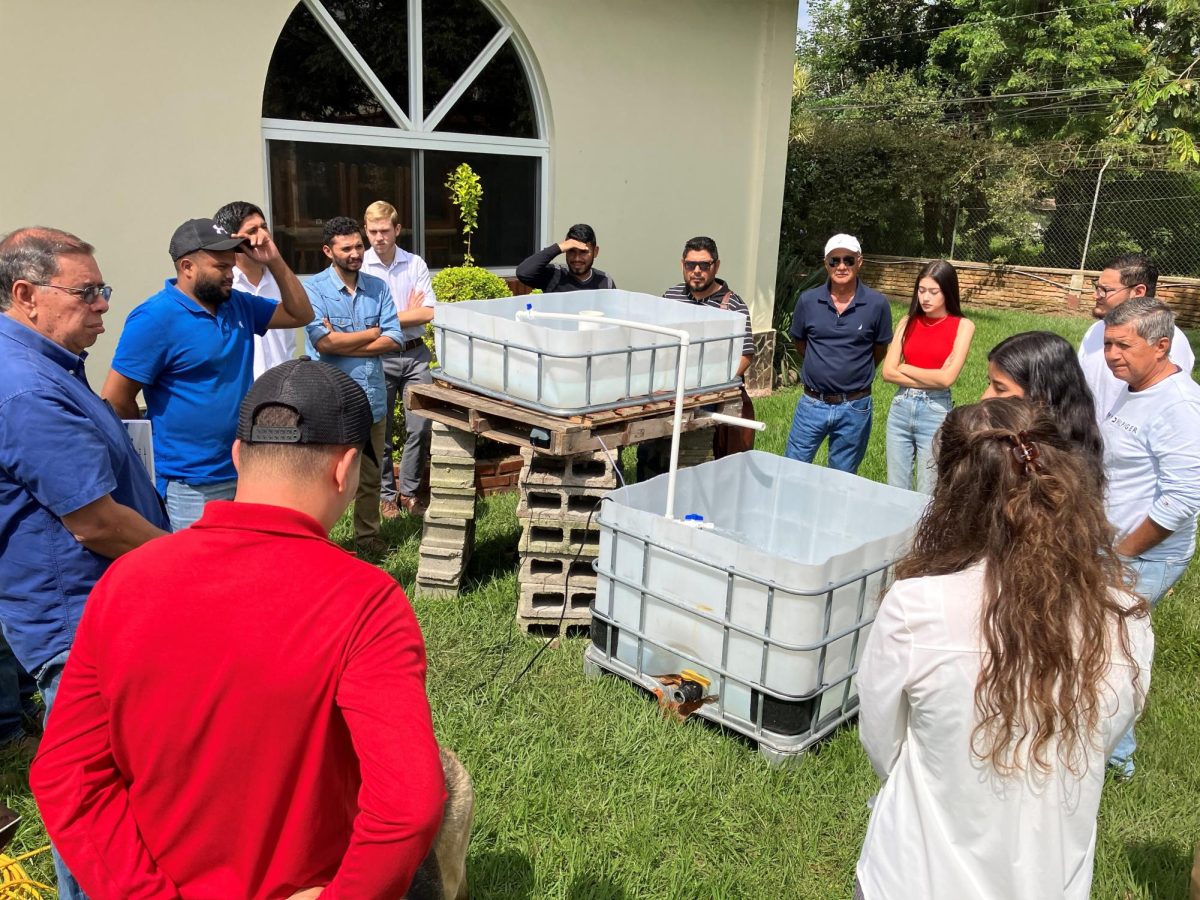
An aquaponics system consists of a fish tank with a gravel bed for the plants. No dirt, just water. The water from the fish tank feeds the plants, while the fish fertilize the plants. The plants, in turn, filter the water for the fish. Aquaponics has been suggested as a good way to address food security in certain Central American countries. These countries are warm year-round, which is good for keeping the fish alive, but also have a months-long dry season without rain. Aquaponics requires little water, allowing farmers to grow enough food to feed their families while also harvesting fish for protein. The Global Challenges team was tasked with creating improved aquaponics systems for poor farmers in Honduras.
“What we worked on is not commercial grade,” Lovegrove said. “You can do this on a big farm, but we were doing family size … small tanks, small number of fish that you could set up in somebody’s backyard. And we had contracts to people that were doing this in Honduras.”
Since it is not beneficial for plants to remain in standing water, the aquaponics tank is drained and filled with water every few minutes to keep the roots wet. This process is managed by an automatic pump known as a Bell Siphon. Fresh water is pumped into the tank, then the siphon automatically drains the water when the tank is full. Once the tank empties, the process repeats itself. It’s fairly simple, but there’s one downside. The Bell Siphon can only handle so much water at one time.
“You have to have a steady stream of water coming into the tank,” Lovegrove said. “And if that stream of water is too fast, it never fills the tank. And if that stream of water is too slow, it’s not enough to start the auto siphon.”
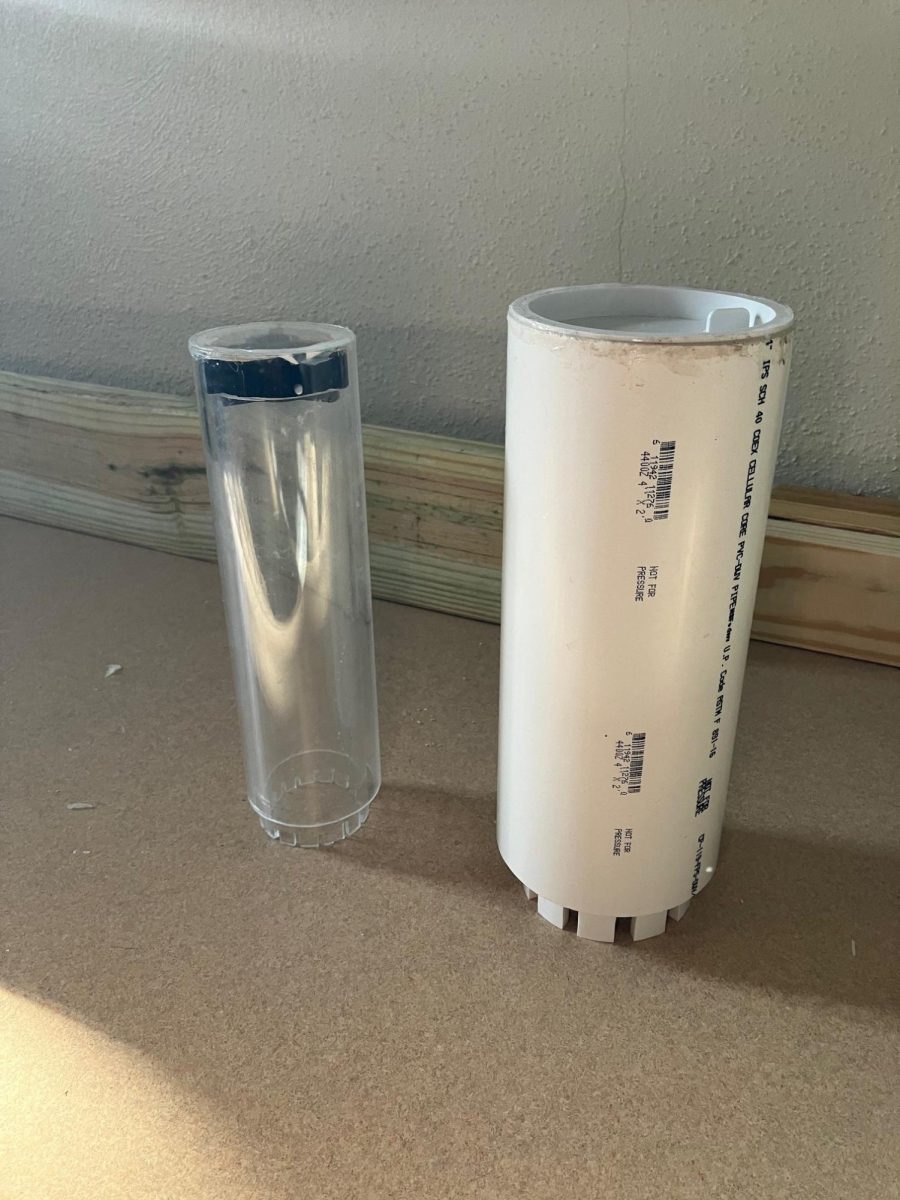
In 2024, Lotts and Winnberg invented an improved Bell Siphon for the aquaponics project. It has a wider range of operation, making the aquaponics process more reliable.
“None of the ideas for improving the siphon were new per se,” Lotts said, “but what we did is apply the idea of the snorkel and cup integrally to the siphon. Traditionally, the snorkel is more like a straw that sticks out the side of the siphon and then the cup would be attached to the end of the straw. So that as the water level gets down to the bottom, the cup floats and sucks in the air to break the siphon. The cup also uniquely makes the entire siphon begin to float and thus disallow water from reentering the cup.”
“I made a deal with Dylan that I would do the drawings if he would do the writing,” Lotts added. “I definitely think I won that deal.”
The engineering team understood that an improved design meant increasing the likelihood the vacuum of water inside the siphon would break when the water level got low.
“We knew an external “snorkel” improved the overall design and the “cup” makes it,” Winnberg said. “So instead of using a small external snorkel, we made it bigger and integrated both the external snorkel and the cup into the primary Bell siphon itself.”
Lotts and Winnberg created a prototype of the new siphon and tested it. Soon after they began testing, Lovegrove walked in with his own prototype. He asked to see how his design compared to theirs.
“So, we had a little competition, and our design came out on top,” Lotts said. “I knew the design had to be good if it outperformed Dr. Lovegrove’s. That kind of thing doesn’t happen often.”
“We trialed it in the test aquaponic system and it worked so well,” Winnberg said. “I kind of just stared at it. Really cool moment when it all clicked for us and started working.”
Dr. Lovegrove and the two seniors filed for a patent for the siphon on behalf of the school. Because the school paid for the project, it owns the rights to the invention. However, Lotts and Winnberg received full credit and are named in the patent as the inventors.
“I remember drafting the first revision of the patent and it being very painstaking because of the strict rules the US Patent Office has on which words are used,” Winnberg recalled. “Dr. Lovegrove helped a lot to make sure Shane and I labeled our CAD drawings accurately and our patent claims were truthful. I would not recommend doing it for fun.”
“Maybe BJU could make patent drafting a senior level writing class,” he added.
With the patent and the improved Bell Siphon, Dr. Lovegrove hopes the Global Challenges class can take the Aquaponics project to the next level. Their goal is to start a viable nonprofit business, raising money to help the farmers in Honduras.
“The goal is maybe to raise money and provide this as a service for people in poor countries,” Lovegrove said. “So that’s part of the business side of it. Starting a nonprofit is completely different from starting a business for profit.”