



































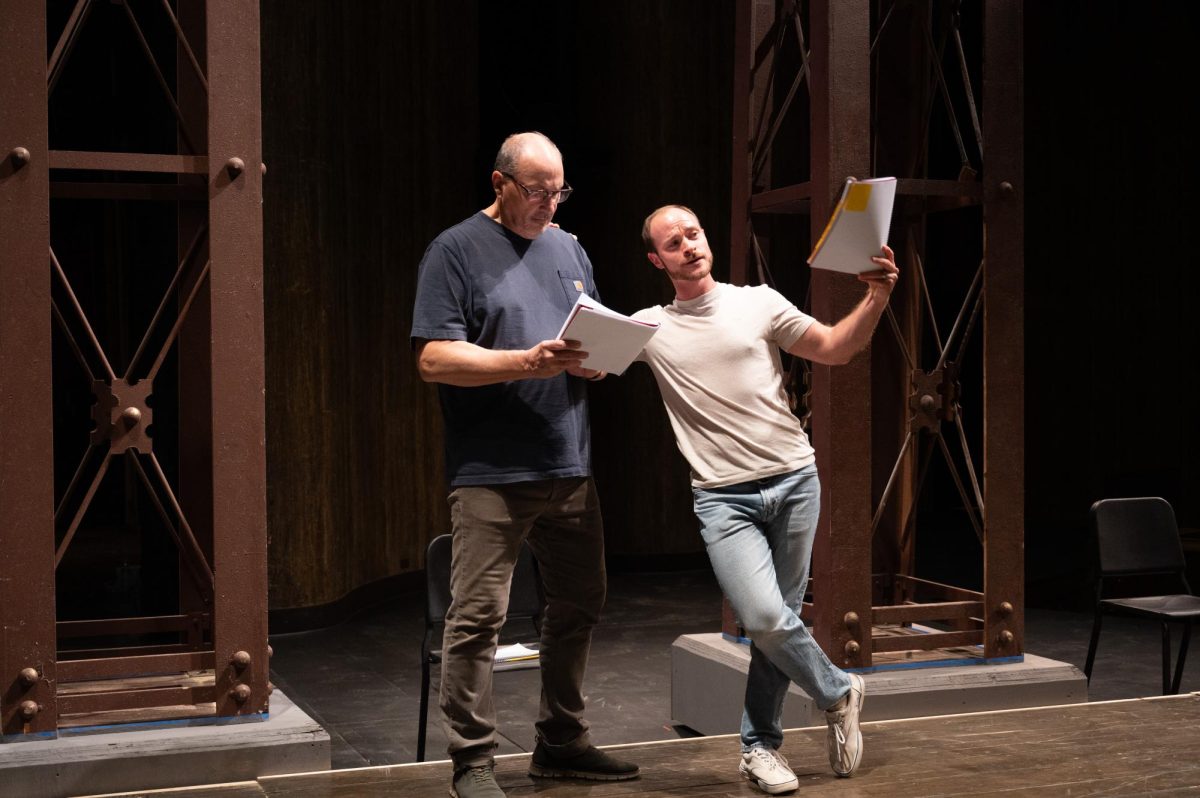
On Nov. 14, 18 and 20, Bob Jones University’s Classic Players will perform the Shakespearean tragedy, “King Lear.” Dr. Lonnie Polson stars as King Lear, accompanied by talented undergraduates and alumni.

Action
The story of “King Lear” revolves around an aging king who tests his daughters’ love as he splits up his kingdom. Family and friends are pitted against each other as the characters reveal their true self.
William Klapperich, the only senior theatre major in the production, is a fight choreographer and will play the Earl of Kent.
“My take on it is that this is a godfather or trusted councilor feel,” Klapperich said.
Klapperich mentioned two prominent themes within the play: loyalty and family. Kent is one of the few loyal characters.
“He comes back to serve King Lear and help him out” Klapperich said. “Cordilla also loves and is loyal to her father even after getting kicked out and sent to France with no dowery. She then is contrasted by the disloyalty of the oldest daughters.”
“You’ve got this kind of parallel plot to Lear with the Duke of Gloucester and his two sons,” Klapperich said. “They display the theme of parents and children, especially the between children and their fathers.”
Actors
Klapperich is preparing for a role of a man at least 20 years his senior.
“I’ve had a couple other roles like this, the kind of stable friend, loyal, morally centered, grounded character. This one’s a little different since he’s older. I have tried some physicality techniques, but I’m not changing my voice a whole lot. And there is another aspect too, I am a college senior, so of the college students in the show, I am one of the older ones, so there is that level as well.”

During rehearsals, director Mr. Jeffrey Stegall guides the actors through the story. He crafts each scene for both performing excellence and well-balanced composition on stage. Through scene rehearsals, Mr. Stegall sits in the empty auditorium and watches the players’ every move. Often during the process, he yells, “Hold!” before rearranging the actors on stage like pieces on a chess board. After a semester of small moves, he will produce the perfect effect to check-mate the audience with a spectacle.
Mr. David Schwingle, BJU’s fine arts artistic director will also be playing the role of Edmund.
“’King Lear’ is a complex and powerful tragedy with immense dramatic and technical demands,” Mr. Schwingle said.
Mr. Schwingle points out one big motivation to produce the show this season.
“Dr. Lonnie Polson, Classic Players’ most prolific actor and newly titled First Player, will reprise his role as King Lear for the third time,” he said. “He brings immense skill and mastery of Shakespeare’s language to the stage. Lear is a monumental role that demands remarkable range and commitment from a seasoned actor. We are blessed to do this production now while Dr. Polson is still treading the boards.”

The lead actor himself commented on his role, saying that this will be his fifth time performing in the show. His first time was 1991 as Edmund.
“And while a more modern acting theory would talk about the need to love the character you’re playing, I try to be a bit objective,” Dr. Polson said. “But there is an element of immersion.
“It does cause you to examine some things in your own life,” he said, continuing, “What kind of father are you? What kind of grandfather are you?”
He leaned back in his sturdy chair. Pictures of his sweet grandchildren smiled at him from his desk.
“There is a kind of a delicate dance between involvement and detachment,” he said.
He mentioned that one of the things he learned from Shakespeare is that you can’t outsmart him. What he thinks about Lear will come through.
Dr. Polson spoke about Lear’s own character, saying that every tragic character has his flaw, but Lear is layered and well-rounded.
“He can be impetuous, childish, and he can be volatile.”
The other characters, no matter how disjointed their family life, love Lear in their own way. Dr. Polson said that some of them even risk their own life for Lear.
“And so you have to stop and say, there’s something going on here about this guy and his fall that is genuinely tragic,” Dr. Polson said.
Shakespeare is often discussed on campus as one of the Greats. But why is he great? Though we all want a cut-and-dry story with cathartic characters and simple justice, “Shakespeare won’t let you do that. He doesn’t let you off the hook. You’re going to have to explore the totality of this man,” Dr. Polson said. “This kind of literature holds a mirror up to nature to show us what people are like.”

Audience
Stories, even at varying levels of richness, change us. Because of this, they wield a power over us, if we let them. Great works deserve our fullest attention and submission, wherever we find them.
This work in particular, Mr. Schwingle said, will transform a submissive audience through a series of questions: How great is the cost of our sin? Who suffers for it? What does genuine love and forgiveness look like? Is loyalty worth personal sacrifice? Can damaged relationships be reconciled? Where can we find hope amid great darkness?
“These are just a few questions audience members may consider once the lights dim,” Mr. Schwingle said. “Lear helps us see better. It’s both a warning and a purgation of our own pride.”
“Like any great artistic work, ‘King Lear’s’ complexity and depth hold various opportunities for self-reflection and pondering important truths,” Mr. Schwingle said.
Beware, all who submit themselves to this work! For we may find our true selves staring right back at us.
Editor’s note: William Klapperich is a staff writer for the Collegian and a cousin of the author.